
As much as I grumble about them the entire time, I do actually quite enjoy heading out to conferences – it’s nice to get out the office and do something different, catch up with clients and partners, meet some new people, rinse the open bars, stock up on new pens – and the Ticketing Professionals Conference is one of the best.
I am a bit biased though – not only do I regularly speak at TPC, I’m also part of the education panel that votes for the sessions that appear on the schedule each year, so I get to help shape the whole thing, in my own small way.
The 2026 edition was over in Manchester once again, so I popped over with a few of my colleagues from our dev and marketing teams to exhibit at the conference, lead some sessions, and see what we could learn.

Funding changes are hitting everyone
There was a lot of talk, both in sessions and between them, about doing more with less and adapting to a world where the arts is suddenly getting a lot less funding – something we’re seeing from the size of the budgets for projects we’ve been receiving briefs for this year. With larger funding bodies slowing down or winding up entirely, they tend a lot smaller than they used to be.
While there was plenty of chatter about how basic out-of-the-box subscription models with a low initial cost can provide all the web and ticketing services you need, I don’t think the traditional way of doing venue websites is anywhere near dead yet. I’m also a little bit concerned about how much you’ll actually pay for those subscriptions over time – eventually it’ll far outstrip the cost of a one-off project.
Still, it’s up to us to prove the web agency model still works, and find solutions to deliver an amazing bespoke standard for smaller budgets – it’s just the name of the game right now. The £30k number is regularly thrown around as a benchmark for a good venue website with a ticketing integration, but we know that it doesn’t need to be that high.
I am still so bored of AI
TPC is a tech-driven conference, so there’s been AI sessions and keynotes and demonstrations and suppliers regularly over the last few years – it is admittedly my least favourite part, but they’re certainly not putting all of the eggs in the AI basket. You can very easily have a mostly AI-free conference if you want to.
So yeah, I mostly avoided sessions on AI, but had a few really good conversations with people who dislike it as much as I do, people who made a very informed and solid argument for use-cases that make a big difference to them (particularly in regards to digital accessibility), and people who know enough about web and software development to know that you can do a lot of things with algorithms and database queries that allow you to do really cool stuff without burning the planet down at the same time.
We have an AI policy in place at Splitpixel, and will be sharing it once we’ve created a public-facing version. If anyone wants to know what’s in there, I’ll gladly share – but it starts from a place of always being responsible. So much of the conversation around AI makes me think it’s a solution in need of a problem – our approach aims to avoid that.
Making the case for ticketing kiosks
There was a lot of chatter about ticketing kiosks this year – digital screens in venues that let you buy tickets without talking to anyone. The self checkout of the theatre, if you will. Smart pieces of kit from the look of things!
But the general vibe I heard from venue staff was that kiosks weren’t for them – that if someone’s buying their ticket in the venue rather than online beforehand, it’s for a reason, and it’s a reason that probably means they want to talk to an actual person.
I generally think it’s important we don’t put more barriers in the way of human communication than we already have, so I’m inclined to agree with that take. If venues do install kiosks, I very much hope that they’re not at the cost of front of house job roles and services.
Progress can’t be at the cost of accessibility
Tech nerds are always thinking about the future – what can we do to innovate and automate and make life more like Star Trek: Deep Space Nine? It’s an impulse that I can sympathise with, because I too wish to vibe out in the holodeck, but it does frequently lead to unwanted tech like the examples mentioned above.
A dangerous trend I am starting to notice is that proposed developments are looking to streamline user journeys and experiences by focusing on the most commonly expected experiences, removing things that might frustrate the average customer. But sometimes a minor frustration for one user is an essential part of the journey for another. Too much streamlining and automating can eliminate edge cases – and that’s often where people with advanced access needs sit.
There were, I have to admit, a couple of questionable suggestions in sessions this year that made me want to remind people to step back and think about every impact a cool new idea might have before you run away with it. Generally speaking, it seems as though venue staff are on board with accessibility more than anyone else, which is always great to see. While we’re always keen to innovate, what we do as an agency is always driven by our clients, and their audience.
The people crave technical details
The cool thing about TPC is that the attendees are generally more technical people who understand a lot more about how websites and their box office systems work than you might see at marketing events for the same sectors. It means they’re always really hungry for the details, and when you deliver a technical session you’re met with enthusiasm rather than blank faces.
I was really happy with the session on Google Ad Grants that I led with our brilliant PPC expert Joe Sturdy. When we present together, I cover the basics, and Joe goes into the detail – a quick show of hands told us that pretty much everyone in the room knew the basic stuff and I could rinse through my slides in, like, five minutes.
It meant Joe had loads more time to unpick the finer points of conversion tracking, bidding strategies, and loads more. The questions we got were from people who had clearly paid close attention and wanted more from us – and we’re always happy to oblige!
Building community matters most
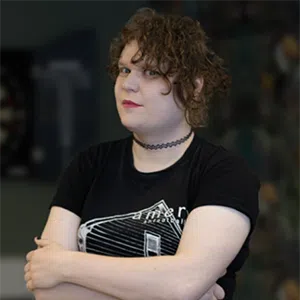
I was proper made up that people showed up for my session on supporting trans audiences – it’s been the most difficult I’ve had to put together, and the closest I’ve come to scrapping the whole thing.
I wanted to talk about how venues could protect trans people that visit them given all of the current political uncertainty around what our rights actually are, with a brief overview of my interpretation of the various guidance and rulings so far, and some practical stuff to go away and think about and/or do.
We got some great discussion going in the room, which is always my favourite part – I’m so appreciative of everyone who spoke up and shared their experiences.
One person asked if there was any kind of professional network for this issue in this sector and I didn’t have an answer – so I’m going to try and start one. Today I set up TransFACET on LinkedIn for LGBTQIA+ people and allies in Fundraising, Arts, Culture, Events and Ticketing working to support trans and nonbinary colleagues, audiences and service users. If that sounds like you, please join!
I’ve also uploaded an abridged version of my slides from the session here. Take a look, and drop me a line if you want more of the details that came out of my mouth in addition to what was on the screen.
Right, thanks for reading – time to go and plan my session for next year. I’d love to do something in partnership with one of the awesome venues we work with, so if you’re up for that, please let me know!
Continue reading...

The six best tools for competitor research and analysis
Understanding what others are up to is essential for developing a marketing plan. Here are some of the tools we use that are much better than peering through windows.
Written by Seth Jackson

Web Design Brand Guidelines – and what to do if you’re worried about web accessibility
Since 2008 I’ve used countless brand guideline documents when designing websites. Back when I started, there wasn’t much of a conversation about accessibility – the overall aesthetic was all people were worried about.
Written by Rob Marshall
Sign up to our newsletter

Lets work together
Contact us